Friday, November 15, 2013

Trashed

What if you were told that your food is contaminated with dangerous chemical substances?  You're probably going to say "No way!"  
Well, believe it or not, it is possible that your food contains dangerous chemical substances.  Candida Brady, a British journalist, found out that chemicals from plastic waste were finding their way into the food chain, and throughout the environment.  Brady then worked together with Jeremy Irons to tell the stories in a documentary.  The documentary reminds us the importance of waste management--well, and probably also the importance of a better behavior for us.


A scene from the documentary ‘Trashed’ with Jeremy Irons, who was in Jakarta for the local premiere. (Photo courtesy of Blenheim Films)
Jeremy Irons1

From The Jakarta Globe

Wednesday, November 13, 2013

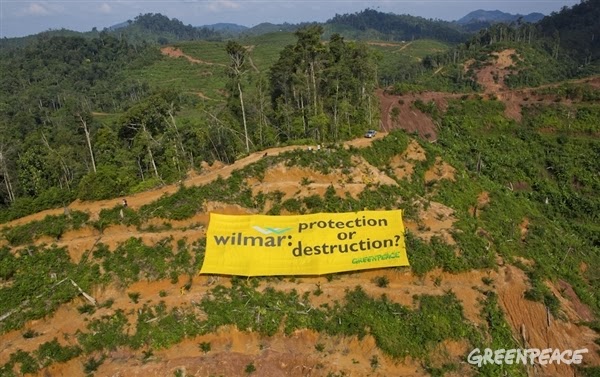
Our Forest...So Sad...Time to be Religious?

Our forest... so sad...


http://www.antaranews.com/berita/352347/kerusakan-hutan-paling-parah-terjadi-zaman-reformasi


http://www.greenpeace.org/seasia/id/blog/14-alasan-mengapa-kita-perlu-menyelamatkan-hu/blog/47270/


Even The Noble Quran has given us warning about the destructions...

"Evil (sins and disobedience to Allah) has appeared on land and sea because of what the hands of men have earned (by oppression and evil deeds), that He (Allah) may make them taste a part of that of which they have done, in order that they may return (by repenting to Allah, and begging His Pardon)." 

Al-Quran Surah 30 Ar-Rum verse no. 41..

I think it's about time we become more religious in every aspect of our life.  Do you agree?

Friday, April 30, 2010

Windmill for Bantar Gebang


The Netherlands has a reputation of trade and industry with technology innovations. Some Dutch companies are well-known as innovative and knowledge intensive enterprises. In 2007, Philips invested 730 million euros in their research and development, while Akzo Nobel invested 400 million euros. Other companies work with knowledge institutes to develop genuinely new technologies. Some companies even have cooperation agreements with universities for many years. Of course, universities in the Netherlands have good reputations. Delft University of Technology, The University of Leiden, Amsterdam University and Erasmus University of Rotterdam are among the top 50 universities in Europe.


Picture from: http://imageofholland.filternet.nl/Kinderdijk/kinderdijkframe.htm

Windmill for Bantar Gebang? It’s just a figure of speech. Windmill reflects Dutch mastery of sustainable technology. The Dutch have the ability to make a real good use of their resources. Bantar Gebang (Waste Disposal Sites), on the other hand, reflects our need to learn more. We need to learn how to develop the ability to invent and apply sustainable technology along with our environmental awareness. We need to learn more.

Waste management is one field we can learn from the Dutch. In Indonesia, we still use our good old conventional method, “dump and go”, or may be the more sophisticated one, sanitary landfill. This is probably because (we think) we have many free grounds. The Dutch, on the contrary, are forced by their lack of space (and their growing environmental awareness) to invent sustainable technology for their waste management system.

In 2006, the Netherlands recycled nearly 65% of their waste, incinerated most of the remainder to generate electricity, and sent only a small portion of the waste to a waste disposal site. Their step-by-step plan said “ avoid as much as waste as possible, recover the valuable raw materials from any waste that is produced, try to generate energy by incinerating the rest of the waste, and then dump what is left over (in an environmentally friendly way).” Only recently the system—known as ‘Lansink’s Ladder’—was included in The European Framework Directive.

The Netherlands government implemented sets of regulations to make Lansink’s Ladder work well. They introduced a tax on every ton of material dumped. Currently, dumping waste in the Netherlands costs about 35 euros per ton. If the waste is combustible, additional 87 euros in tax must be paid.

Dutch companies develop profitable business by offering better possibilities in managing waste. More improved technology and systems are being developed. Eindhoven-based company Bakker Magnetics is an example.
Working together with Delft University of Technology, they developed the Magnetic Density Separator. They can build great business by recovering valuable materials from stream of waste.

Picture from: Made in Holland, Waste 2008

Dutch knowledge and expertise in waste management are exported worldwide by companies like Royal Haskoning, Tebodin and DHV. How can we import their knowledge and expertise here? Furthermore, how can we learn to develop our own knowledge and expertise? Studying in the Netherlands is a probably a good start.

[kompetiblog]
[studi di belanda]

Thursday, April 22, 2010

Earth Day Celebration, 40 years—22 April 2010

Let’s care for our environment..
The world is under a great threat. Energy crisis, clean water crisis, more extensive flood, just to name some of our problems. Climate change probably remains the greatest threat. However, the situation should be used to find breakthrough, to find ways for us to use energy more efficiently, to use our natural resources wisely, and may be to develop sustainable green businesses.
Thinking big? Try to act small first. Let’s start from ourselves. Let’s start now.

Wednesday, July 15, 2009

CSR

Corporate Social Responsibility programs—often mentioned as Community Development programs—can be held in ceremonial activities as well as in long term activities. Some target areas for CSR programs are education, health, and natural conservation areas.

In ceremonial activities, a company can hold green campaigns celebrating certain events like Earth Day. Acitivities like planting trees, or cleaning up a conservation area usually involve mass of people. So these activities can also be beneficial for the company’s corporate image.

In long term programs, CSR can be deployed into activities like small green business coaching and mentoring. A company can also work together with a conservation agency to finance conservation projects. Some conservation projects focus on empowering people who live around conservation areas. In these kinds of programs a company can use its corporate social responsibility unit to get involved. Wether in form of funds or in form of technical assistance, the company's contribution will be valuable.

Sunday, November 9, 2008

Home Made Composter

Rain barrel, drums, etc can be made into a composter. I wonder what are the alternatives.. It might be interesting to do some trial & error making compost by using our own home made composter.

Monday, June 2, 2008

Don't Burn Those Grass Clippings, Please

Don't burn grass clippings. Grass clippings contain water, moisture within it, so they produce heavy smoke when burned. We can still find people burning them, in the middle of a really hot day... Tell them not to. Grass clippings are good materials for compost.

Monday, April 21, 2008

Shower Curtain from Scraps

More creativity for scrap-based products..

Friday, March 28, 2008

Bad Habit? Throw Away Your Waste..


Here we can see that there are still a lot of people who do not know how to do (or to care about?) their domestic waste management.
Integrated waste management system? It 's still a long long way to go.. Green campaigns to build environmental awareness must go on.

Monday, March 3, 2008

Be Creative!


Our domestic waste can be very useful. Organic waste is the material for compost, while plastic scraps are supplies for creativity.. With a little bit of creativity, we could also learn to create something nice like the bag in the picture, which is made of detergent sachets scraps.

Wednesday, February 27, 2008

Lack of Information or Just a Bad Habit


What would we think when we see a picture of a creek clogged by a pile of waste? We probably would think that people dumping waste there are not well educated. It might be caused by a lack of information on waste management. Is that true? Well, we might never be able to tell if it is true. It might also be caused by a bad habit. As we can see in the picture, the waste pile is located at the side of a city road. There are some car drivers and motorcycle riders who intentionally slow their vehicles down to toss their plastic bags--fully loaded with fruit and food leftovers, soft drink cans, etc.--to the creek. It looks like they are used to the thoughts like "ok, it's time to empty the waste bin, let's go to the creek.." or something like that.

Monday, February 18, 2008

Compost Community

Caring for our environment is a pleasure. Is that right? What do we feel when we just did something good? Contented, probably. Why don't we share our pleasure with our friends, neighbors, family and every one we know? Let's share! Share the information that our environment needs help, needs full attention. Share that by reducing our waste, especially plastic waste, we contribute an action to the preservation of the environment. Share that by sorting or selecting our waste we would be able to provide materials for compost, for recycling programs. Let's share! Build a community that cares!

Monday, February 11, 2008

Back to Composting..


Here's one information from my local community...

Simple Steps to Composting

Facts

  1. Takakura composting utilizes aerobic microbes, which need water, oxygen and correct temperature; frequent mixing helps supply oxygen.
  2. Correct composting generates warmth and moisture when mixed.
  3. Microbes need carbon-rich materials -- dry, coarse, rich in fiber and are brown in color (dry leaves, dry grass, rice hull, corn husks, sawdust, straw) -- as energy source.
  4. Microbes need nitrogen-rich materials -- have high water content and usually are green (vegetables, fruits, kitchen waste, egg shells, used tea leaves, coffee grinds) -- to propagate.
  5. One part brown material mixed with two parts green make the best compost.
  6. Correct compost smells like healthy soil.


Takakura composting

  1. Prepare Takakura Magic Basket.
  2. Use mature compost (6-8 kg) as compost starter.
  3. Cut small pieces (2 x 2 cm) of organic waste (fruit peels, egg shells, garden and kitchen leaves, rice, vegetables); discard broth in food for composting; do not use bones, shrimp or leftover meats/animal products in compost -- they attract flies
  4. Make a well in the starter, put in waste in and mix.
  5. Cover basket to warm mixture and prevent flies from laying eggs.
  6. Optimum humidity is achieved when compost mixture is damp, but produces no dripping water when squeezed. Add rice hull or dry leaves if compost is watery, or sprinkle on a little water if compost is dry.
  7. Stir regularly 2-3 times a week. Do not add more waste to a full basket -- remove the mixture to a bigger composter to add waste.
  8. Compost is ripe when its temperature, appearance and smell resemble soil: in about eight weeks.


Tips

  1. Get the entire family involved.
  2. Put a pair of scissors on the dining table and get everyone to cut up their share of waste
  3. Place Takakura baskets in several strategic areas in/around the house; those who enter the area are responsible for mixing the compost.

From: The Jakarta Post, February 11, 2008

Tuesday, January 29, 2008

Integrated Waste Management?


If we want to start our waste management program, we need to plan it well. The plan should consider all aspects, from the first steps of examining and separating our waste to the actual how to recycle or to produce anything useful as the end products. Why is this plan important? Because we need to make sure that our program can actually work. It is sad to know that there are some communities work hard to educate people the importance of waste separating, recycling or composting, while the local authorities haven't even come up with any plan of waste management. People actually separate their waste, but unfortunately after that, the garbage truck mix it back again. So, we need to plan what to do with our separated waste. Working together with our community is one way to make a different..

Tuesday, December 18, 2007

Let's Continue

First step to our waste management and recycling project seems very simple and easy, but can all of us really do it? It’s hard to imagine. For example, after separating organic waste, we should then process it to become compost materials. How many of us know anything about composting organic waste? Furthermore, how many of us have our own backyards? Hmm..Let’s not let these problems stop us from learning, OK? Actually, learning about composting process is not very hard, but we’ll try to post it later.

As a preview, let’s take a look at some of the tools we need:

  • Composters
    People in developing countries may use more simple tools, like modified oil drums, wire mesh, etc. Simple tools are used because most of them are less expensive, only need a bit more extra work. In developed countries we can find more advanced (and more expensive) tools, such as urban compost tumbler. It still uses simple technology, but it may be able to make our work easier. Anyway, you can decide which tools you want to use. If you have extra space in your backyard, and have no problem with compost piles in it for some time, then you can try to use the less expensive approach. If you want something more practical and have some extra money to buy it, then you can try looking for your own urban compost tumbler. It probably even comes with a manual!

Monday, December 17, 2007

Let's Begin

Waste management and recycling, energy efficiency. Those are some of the things we need to know (and to practice) to make our home a little bit more eco-friendly. Where do we begin? Actually, the first thing we can easily do at home is to examine our waste bin:
  • Can we reduce our thrash?
  • Can we start sorting our thrash? Generally, there are four groups of thrash we can separate: organic, paper, plastics and glass.
This initial identification process is necessary for us to continue our basic home waste management and recycling program. After that we can probably see our rather excessive use of paper, or plastic bags, wraps and dishes. Then we can continue.

Sunday, December 16, 2007

Little Home Earth

Hello,
Little Home Earth idea defines our world as a small place for us all to live together. As a place called home, this small place should be..hmm..what is the right word to describe it? Cozy? Comfy? Homy is more like it.